
Livestock logistics and reefer transport under digital yard control
Why livestock cargo needs special treatment
Meat, dairy, eggs, animal by-products, feed additives and veterinary vaccines are more sensitive than most food cargo. They travel under strict sanitary rules, narrow temperature bands and short shelf life. Any extra day in a random stack on an inland depot or terminal can turn into product loss, claims or blocked shipments at veterinary control.
Refrigerated containers solve part of the problem. They keep a stable climate from processing plant to overseas market. Still, cold equipment alone is not enough. The chain also needs precise planning of plugs, fast handover at gate, clear task lists for equipment and full traceability of every handling step.
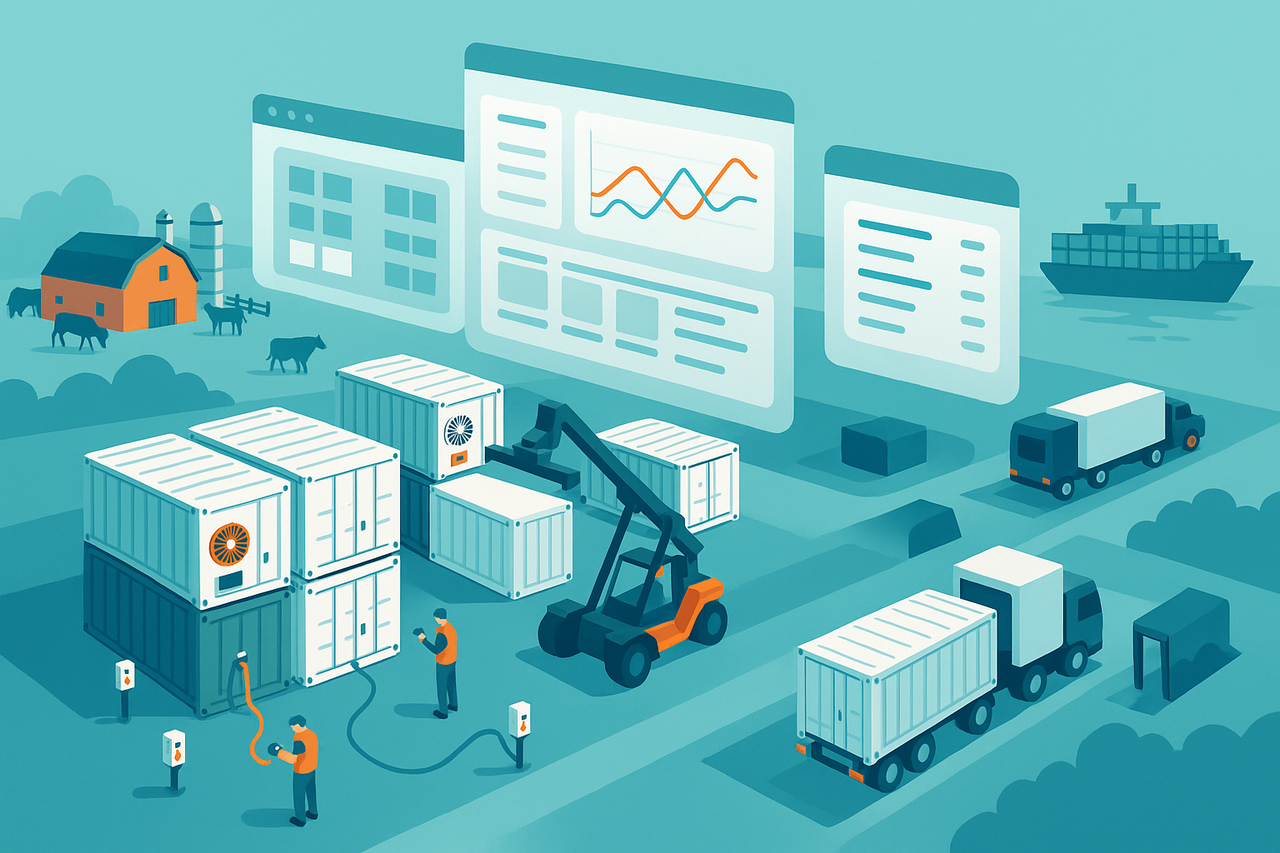
From farm to port: typical reefer journey
A simplified export flow for meat or other animal goods often looks like this:
- Animals go from farm to slaughterhouse or processing plant.
- Product is chilled or frozen, packed and palletized in a hygienic zone.
- Pallets move to a stuffing area, where reefers are loaded and sealed.
- Containers travel by truck or rail to an inland depot or terminal.
- Units wait for a train slot or export vessel while plugged to yard power.
- After the ocean leg, reefers pass import terminal, veterinary check and final distribution centre.
On paper this chain looks linear. In reality, delays at depots, last-minute rebooking, lack of available plugs or simple human error easily break the ideal plan.
Common pain points in reefer operations
Most issues appear in the yard, not on the vessel:
- Limited power points. More reefers arrive than outlets. Without prioritization, valuable loads compete for the same plug.
- Wrong stacking decisions. Containers with close cut-off time end up behind long-term storage, so extra reshuffles are needed.
- Manual temperature checks. Paper rounds and scattered spreadsheets make it hard to prove that cold-chain rules were followed.
- Weak link to documents. Health certificates, seals and inspection results live in a different system than yard movements.
- No single picture for partners. Shippers, forwarders and importers receive partial updates and react late to incidents.
When the depot runs this way, even a small incident — for example, one unplugged container during a night shift — can damage a whole shipment of meat or vaccines.
How Contpark structures livestock flows in reefers
A dedicated yard and terminal platform turns this fragile process into a controlled operation. Contpark gives depots and terminals a visual overview of every reefer: position on the map, plug state, temperature set-point, alarm status and remaining free time. Operators handle exceptions early instead of discovering them when the container is already at the gate or under inspection.
- Live yard map. Each unit has a clear block, row and tier. Colour codes show which containers hold animal products with urgent departure or tight shelf life.
- Power management. The system tracks where outlets are, which ones are free and which reefers must move first when demand for plugs grows.
- Task lists for equipment. Reachstackers and terminal tractors receive ordered jobs: plug, unplug, pre-cool, reshuffle, move to inspection bay, load to rail or truck.
- Service history. Pre-trip inspections, washing, sanitizing, repairs and monitoring rounds are tied to the container record with time and user.
- Alerts and thresholds. Deviations from target temperature or too long dwell time trigger notifications for the right role instead of getting lost in general alarms.
Integration with TMS, ERP and veterinary systems
Contpark can exchange data with transport, commercial and compliance tools via API or EDI. Booking numbers, customers, commodity type, seal IDs and health certificate references travel together with yard events. When a reefer passes gate-in, the back-office already knows what is inside and which documents belong to that unit.
This link helps logistics teams answer key questions in seconds:
- Which containers carry chilled beef for a specific importer and where are they parked?
- Which reefers with dairy products will hit cut-off in the next six hours?
- Where are units that require veterinary inspection before loading, and who handled them last?
For companies that work under export subsidies or strict quota, such clarity is crucial: every lost container can not only damage cargo but also break quota usage plans.
Example scenarios in livestock logistics
Consider a depot that consolidates frozen poultry for several exporters. During peak season, rail slots and vessel space are tight, and reefers arrive faster than planned. With Contpark, operations planners filter all units by product type, client and departure date, then move priority boxes closer to the gate and plug zones. Secondary loads go to deeper stacks or wait in pre-defined overflow areas. The system guides equipment step by step, so the plan on screen becomes reality on the ground.
Another case: a terminal that receives vaccines in small reefers with narrow temperature limits. Every monitoring round is logged in the platform; if a reading goes out of range, staff see it next to the container position, not hidden in a separate file. When authorities request proof of handling, the terminal can export a full history of moves, temperature checks and services linked to that unit.
Compliance, claims and trust
Livestock supply chains involve many auditors: veterinary services, customs, health authorities, brand owners and retailers. A digital record from the yard helps each party see that the product stayed within limits during storage and handover. This reduces the number of disputes, speeds up inspections and strengthens cooperation between producers, logistics providers and regulators.
How to start
Terminals and depots do not need a complete system overhaul to gain this control. They can launch a pilot on one area or product group, connect it to existing processes and expand step by step once the team is comfortable.
- Increase your terminal's productivity and safety with container terminal management system designed for modern challenges.